2025
2025
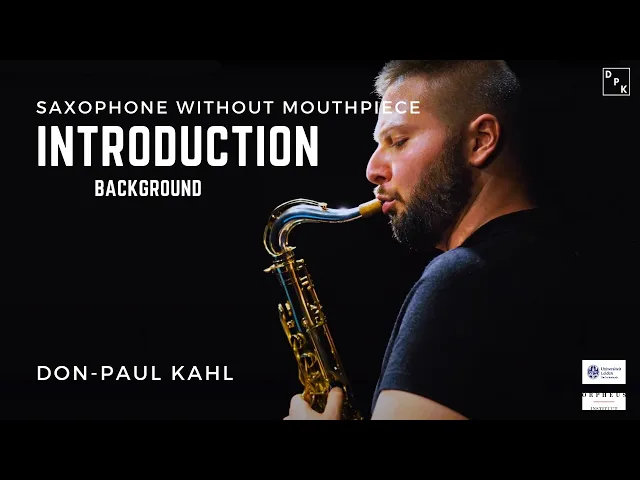
Saxophone without Mouthpiece - Phd Doctoral Research
Dr. Don-Paul Kahl earned his PhD in Artistic Research from Universiteit Leiden in The Netherlands. His doctoral work was completed in collaboration with the Academy of Creative and Performing Arts at Leiden University and the Orpheus Institute in Belgium.
He presented a lecture-recital on his research on 27 January 2025 at the Royal Conservatoire Den Haag and publicly defended his PhD thesis on 28 January 2025 at the Academiegebouw at Leiden University.
Abstract
Saxophone without mouthpiece (SWMP) techniques involve removing the mouthpiece from the saxophone’s neck, adjusting the embouchure, and blowing air in specific ways to produce distinct sounds. This dissertation will focus on four such techniques: air pitch, tongue rams, trumpet sounds, and saxo-flute hybridity. Since the 1980s, composers have incorporated these techniques into their works. However, they have remained relatively under-researched, leading to many misconceptions among both performers and composers. Through my practice-led research, which includes experimentation, historical and aesthetic contextualization, sonic analyses, pedagogical insights, in-depth performances, collaboration with composers on new works, and addressing notational challenges with potential solutions, the intricate nature of these techniques can be more comprehensively understood by saxophonists, composers, and researchers.
The culmination of this research is an online dissertation featuring text and videos, which will examine three primary components:
Contextualization of SWMP: This component investigates SWMP techniques within an historical framework. It situates these techniques within various aesthetic movements and perspectives in music, providing a richer and deeper understanding. Additionally, it examines the techniques in the context of modern performance practices.
Technical Information for Performers and Composers: This section offers performers practical advice on successfully executing these techniques. It also provides composers with guidance on how to properly incorporate these techniques into their works.
An Analysis of Notation: This section looks at the role notation plays in the interpretation of SWMP pieces and techniques. The analysis examines the importance of some more or less standardized guidelines when composing with these techniques and highlights the critical relationship between composer and performer in both composition and performance.
The texts and videos are supplemented by a comprehensive collection of personal audio and video performances, a detailed pitch manual (including recordings of each individual note possible), and other essential materials, such as a searchable database of repertoire that employs SWMP techniques. Additionally, I personally conducted interviews with several composers and one performer, which are included as part of this supplemental material.
His research exists as a separate website and can be found at the following link: